Cape Vulture
Gyps coprotheres
Endangered. The valley's signature bird: huge, social, and spectacular off the cliffs.
Cliffline · Ridge trails →The headline act
The Magaliesberg cliffs near Hartbeespoort are one of the strongholds of the Cape Vulture, Africa's largest vulture and one of its most endangered. The colony uses the cliff faces as roosting and breeding sites and the thermals above the ridge as their daily commute.
Mid-morning on a warm day is prime time: the thermals switch on, and the colony goes to work over the valley.
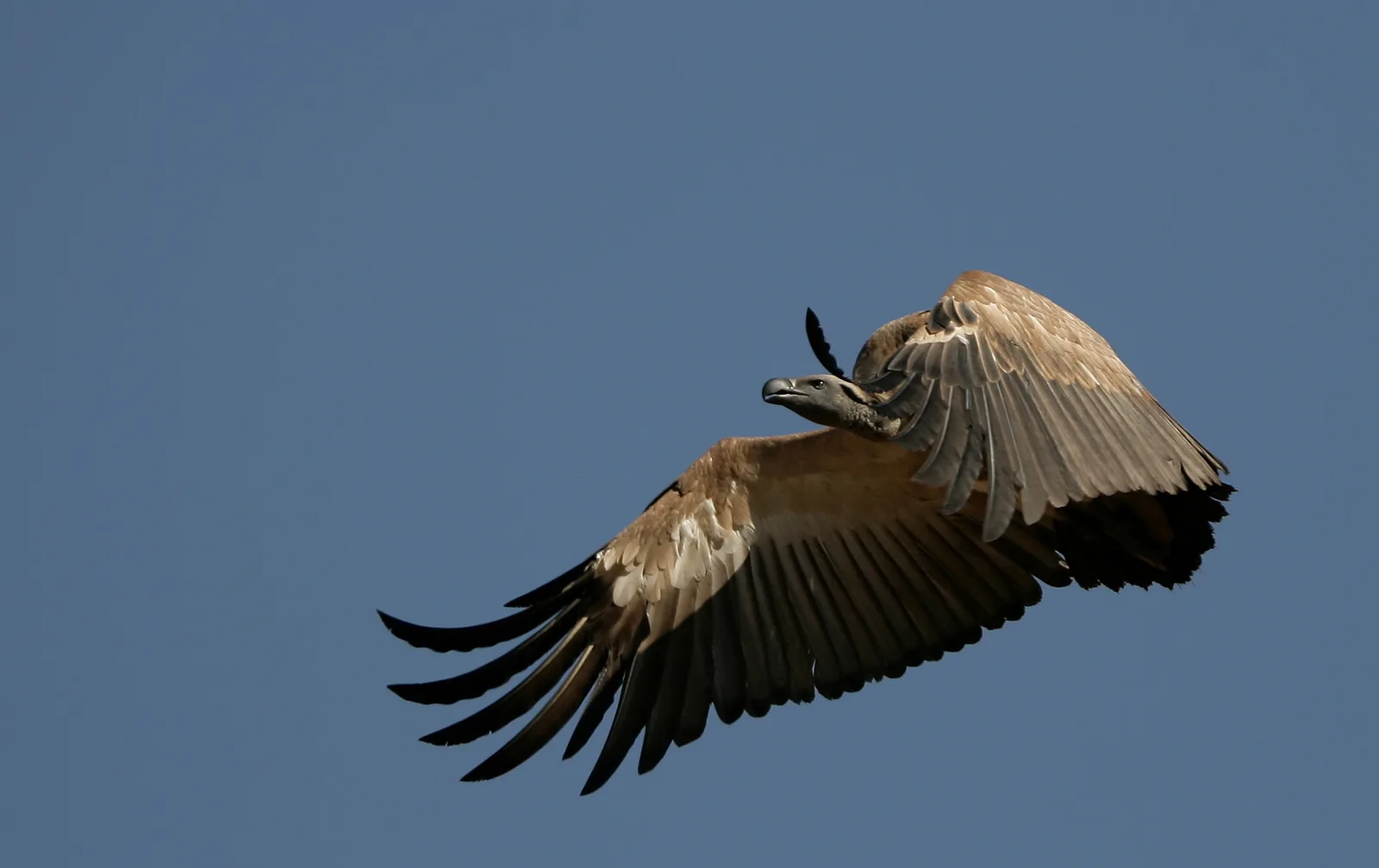
Cape Vulture · photo by NJR ZA / Wikimedia Commons, CC BY-SA 3.0
The spotting board
Gyps coprotheres
Endangered. The valley's signature bird: huge, social, and spectacular off the cliffs.
Cliffline · Ridge trails →Aquila verreauxii
Jet-black cliff hunter, usually seen in pairs patrolling the rock faces for dassies.
Cliffline · High kloofs →Falco biarmicus
Fast, low and sudden. Watch the cliff edges where the ridge wind compresses.
Cliffline · Open ridge →Thamnolaea cinnamomeiventris
Glossy black and rust, bold as anything around the rocky outcrops near the trails.
Rocky slopes →Monticola rupestris
A blue-headed singer of boulder fields, often perched up and calling at first light.
Boulder slopes →Laniarius atrococcineus
A flash of impossible red in the valley thornveld. You'll hear the duet before you see it.
Valley bush · Lower loop →Birding questions
Mid-morning on a warm day is prime time. The thermals switch on once the sun has warmed the cliffs, typically 09:00–12:00 on summer days.
The upper sections of the Red and Black trails bring you closest to the cliffline where the Cape Vultures roost and breed.
Over 200 species have been recorded across three habitats: cliffline, wooded kloofs and valley grassland. A careful morning on the Red trail regularly yields 20–30 species.
Binoculars are essential. A field guide or birding app is recommended. Arrive early for the best activity.
Yes. Birding clubs and photographers are welcome, and weekday access can be arranged so you have the mountain to yourself.
200+ species · Three habitats